
Think Like a Fire Scientist: Video with Question Samples
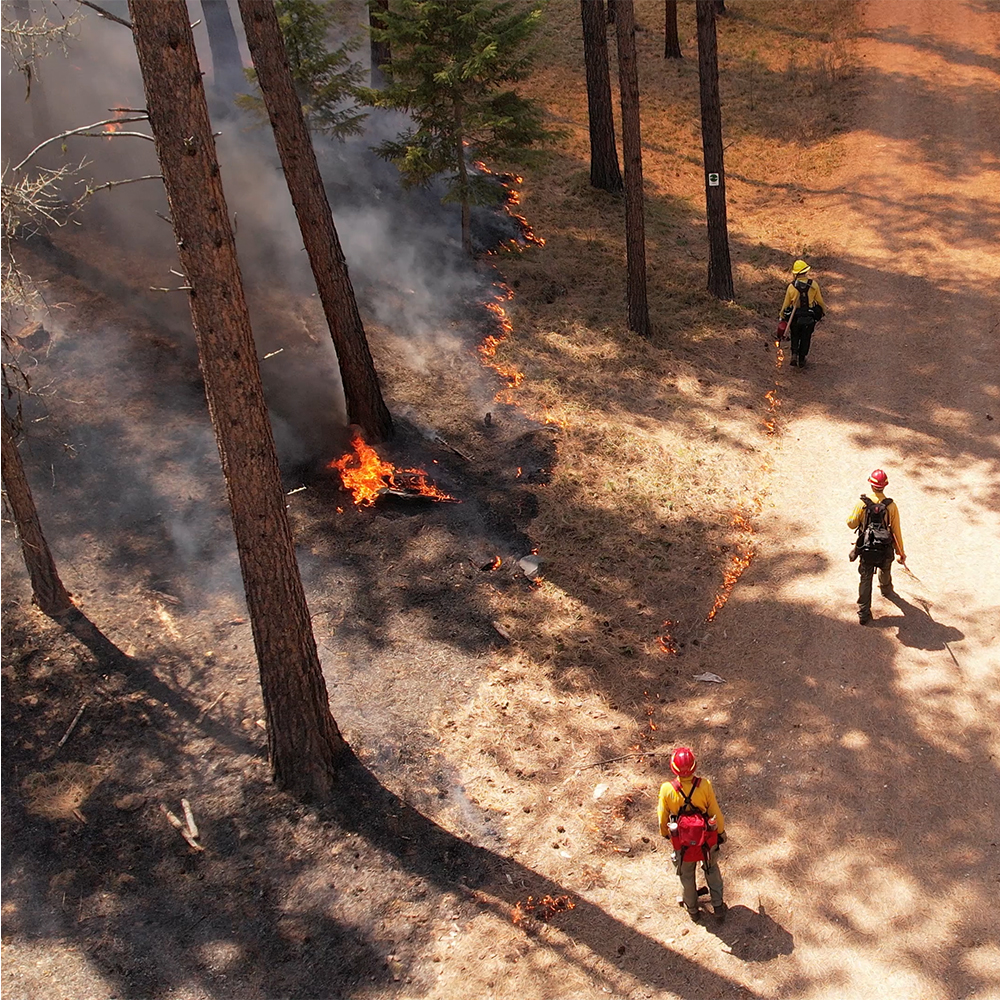
Use observation skills to analyze smoke, wind, forest conditions, fire breaks, and burn crew activities during a prescribed burn.
Resources
- Prescribed fire YouTube video (3 m 17 s) – Note: for more observation time, right click anywhere on the video and select “Loop.” You may wish to contrast this with a catastrophic wildfire video (search on YouTube), for example, fires at Yellowstone (note this footage may be inappropriate for very young children).
- Use with Think Like a Fire Scientist activity sheet
- Learn more about prescribed fire from the U.S. Forest Service
This video is intended for use in upper elementary and beyond for sparking discussions around fire science and prescribed burns.
The video shows a prescribed burn at Lubrecht Experimental Forest near Missoula, Montana. The burn was carefully planned and conducted by a team of fire scientists and burn managers researching forest management strategies that can help reduce wildfire risk and improve forest health.
Unlike wildfires, prescribed burns are intentionally set under carefully selected weather and environmental conditions. These managed fires help remove excess vegetation and other fuels that can contribute to larger, more severe wildfires. Prescribed fire can also help maintain healthier forests and support fire-adapted ecosystems.
As you watch, use your observation skills to investigate what’s happening in the scene:
- Which direction is the smoke blowing?
- What does that tell you about the wind?
- Which way is the fire moving?
- Does the forest appear dense or open?
- How might forest conditions influence fire behavior?
- How many burn crew members can you count?
- What different roles do they appear to have?
- What tools and equipment are being used?
- Can you spot the fire break?
One important feature visible in this burn is the road, which serves as a fire break. Fire breaks help prevent fire from spreading beyond a planned area and are a key component of prescribed burn operations. Notice how burn managers use roads, weather conditions, crew members, equipment, and careful planning to keep the fire within the intended area.
Prescribed burns are planned using weather forecasts, fuel conditions, terrain, and safety considerations. Fire scientists and land managers use these tools to better understand fire behavior and create forests that are more resilient to future wildfires.