
College Students Gain Hands-On Experience During Prescribed Burn Near Billings
Last spring, students from City College at Montana State University Billings stepped beyond the classroom and onto the fireline, gaining firsthand experience during a prescribed burn at the private O’Donnell Ranch near Billings.
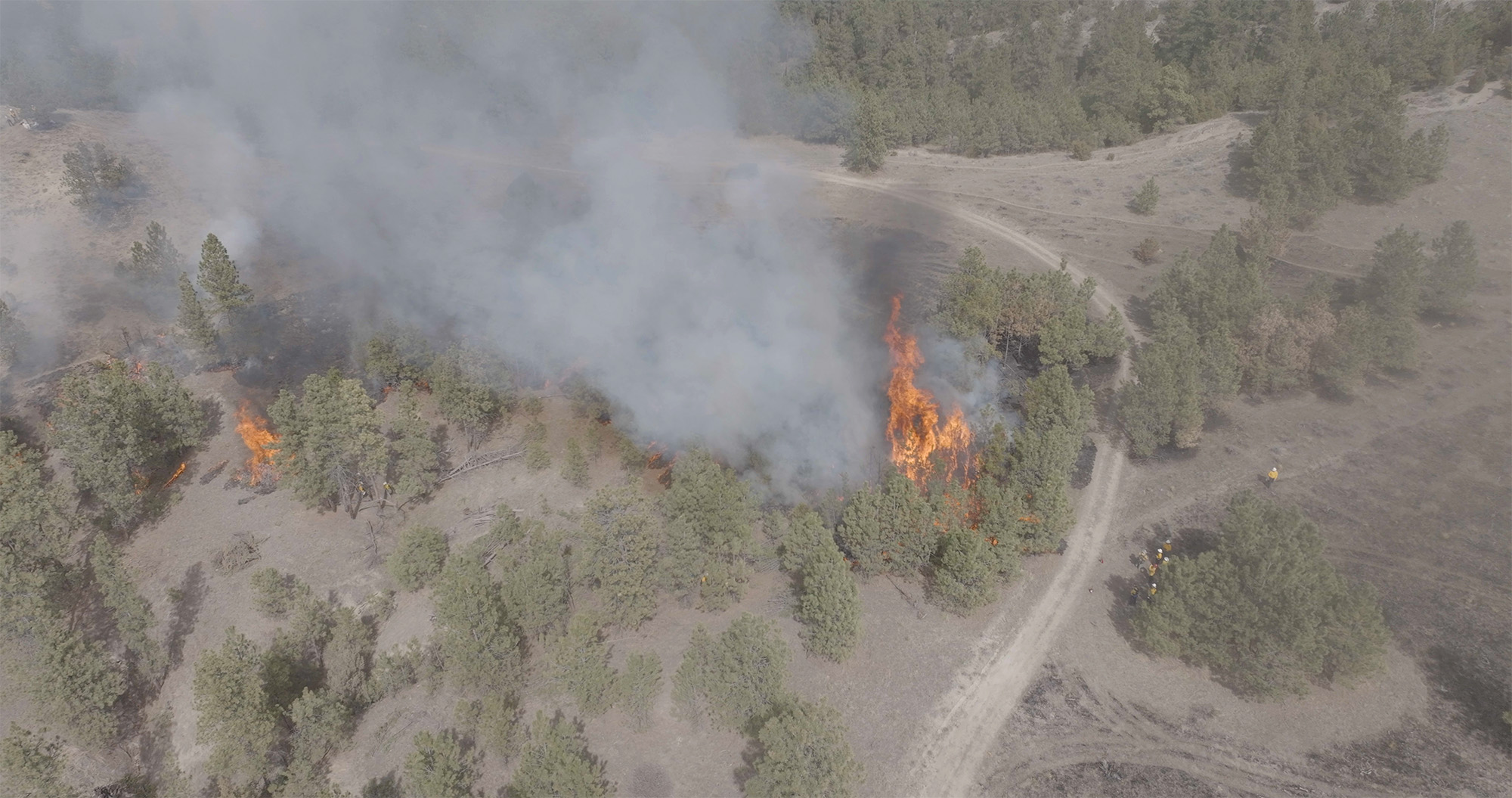
Led by Billings Fire Department Captain, Bureau of Land Management fire and fuels management specialist, and City College Fire Science instructor Taig O’Donnell, the burn provided students with a rare opportunity to apply their training in a real-world setting while helping restore a landscape that had not experienced fire for 80 years.
For O’Donnell, the prescribed burn served multiple purposes. In addition to reducing accumulated fuels and supporting ecosystem health, it became an outdoor classroom for future fire professionals.
As a recipient of a 2025 SMART FIRES Seed Award, O’Donnell introduced a new one-credit Wildland Firefighting Lab at City College. The lab allows students to complete the psychomotor skills required for National Wildfire Coordinating Group (NWCG) S-130 Firefighter Training and S-190 Introduction to Wildland Fire Behavior certifications.
Fifteen students enrolled in the lab, along with approximately a dozen additional participants completing certification requirements, attended the prescribed burn as part of their field training experience.
Prior to the burn, students analyzed data collected from the ranch and examined vegetation characteristics to better understand fuels on the landscape. O’Donnell had previously completed fuels management work at the site, developed the burn plan, and gathered information that students used to conduct fuels characterization exercises.
On burn day, students rotated through multiple operational stations, gaining experience with activities essential to wildland fire operations. They assisted with fire ignition, operated water pumps, managed hoses and nozzles, monitored conditions from a lookout position, collected weather observations, and practiced radio communications.
The experience connected classroom lessons about fire behavior to the realities of fire operations.
“Many students enter the Fire Science program interested primarily in structural firefighting,” said O’Donnell. “After experiencing wildland fire training and prescribed fire operations, some develop an interest in wildland firefighting and prescribed fire as important land management tools.”
The Wildland Firefighting course is a required component of the two-year Fire Science certification program at City College. Through experiences like the prescribed burn, students gain practical skills while building a deeper understanding of how fire can be used to support healthier, more resilient landscapes.
The learning may not end with the burn itself. O’Donnell hopes future students will return to the site to evaluate fire effects and observe how the landscape responds over time.
By combining hands-on training, scientific data analysis, and real-world fire management, the prescribed burn demonstrated how education and applied research can work together to prepare the next generation of fire professionals.