
Education & Workforce Development
Education and Workforce Development are central to the SMART FIRES project, building pathways that connect students, educators, and communities with hands-on research and career opportunities in fire science and environmental resilience. Through experiential learning, internships, and faculty-led mentorship, SMART FIRES equips participants with the skills and knowledge needed to address complex wildfire challenges while strengthening Montana’s workforce. By fostering collaboration across K–12, higher education, and community partners, the program supports a diverse, well-prepared pipeline of future scientists, land managers, and professionals dedicated to sustainable fire management and ecosystem health.
Montana K-12 Educator Needs Assessment Survey Report

A 2024 statewide needs assessment conducted by Montana State University’s Science Math Resource Center surveyed Montana K-12 educators about their professional development interests, barriers, and resource needs. The report found that teachers across subjects and grade levels are highly interested in STEM-focused professional development, particularly topics such as place-based learning, educational technologies, engineering design, inquiry-based teaching, and connections between classroom learning and real-world careers. Educators also expressed strong interest in engaging directly with researchers, accessing authentic research datasets, and bringing current scientific research into their classrooms.
The survey identified several barriers to participation in professional development, including limited funding, lack of substitute teachers, time constraints, and geographic distance, especially for educators in rural communities. Despite these challenges, teachers overwhelmingly recognized the value of STEM learning and expressed a desire for more opportunities to connect with emerging research and local industry partners.
These findings align closely with the goals of SMART FIRES. Through teacher workshops, classroom resources, researcher-educator partnerships, youth outreach programs, and access to real-world fire, smoke, sensor, and environmental data, SMART FIRES helps address many of the needs identified by Montana educators. The report specifically highlights interest in research areas that overlap with SMART FIRES, including prescribed fire, wildfire smoke, sensor technology, artificial intelligence, and the use of authentic scientific datasets in K-12 education. By connecting educators with current Montana research and providing place-based learning opportunities, SMART FIRES supports both STEM education and community resilience across the state.
Related Posts
-

Undergraduate Researcher Spotlight: Isaiah Wilson
When Isaiah Wilson first joined SMART FIRES as an undergraduate researcher, he was looking for opportunities to apply his growing skills in computer science…
-

2025 Seed Awards
The SMART FIRES Research Seed Award Program provides funding to support innovative research projects that align with the goals of the SMART FIRES NSF…
-

Early Professional Career Development Awards
The 2025 SMART FIRES Early Professional Career Development awards provide support for early-career faculty and postdoctoral scholars at Montana State University in disciplines related…
-
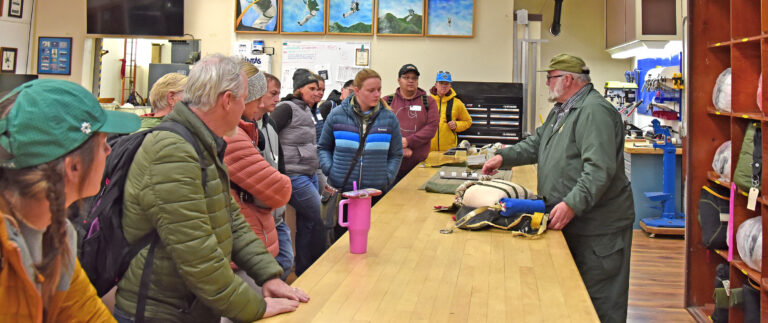
Fire Science Field Day: Educators Explore Wildfire Mitigation in Montana
As part of the Montana Federation of Public Employees 2025 Educator Conference, SMART FIRES hosted a Fire Science Field Day in Missoula on October…
-
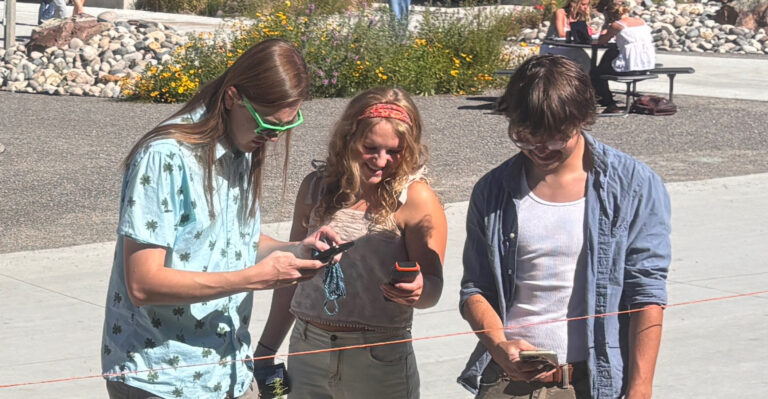
Future teachers explore citizen science at MSU
Pre-service teachers (future science teachers) from EDM 403 and EDM 415 (Science Methods) at MSU helped pilot-test Temtop air quality instruments as part of their classes’…
-
SMART FIRES shares research with teachers at STEM Summer Institute
Each year, the Science Math Resource Center at MSU co-hosts the STEM Summer Institute, an annual conference for over 170 K-12 educators from around…