
Community Members Explore Citizen Science During Earth Week at Indreland Audubon Preserve
On April 21, the Indreland Audubon Wetland Preserve in Bozeman welcomed community members for an Earth Week celebration of citizen science. With warm spring temperatures and birds active throughout the Preserve, it was a perfect evening to get outside and explore.
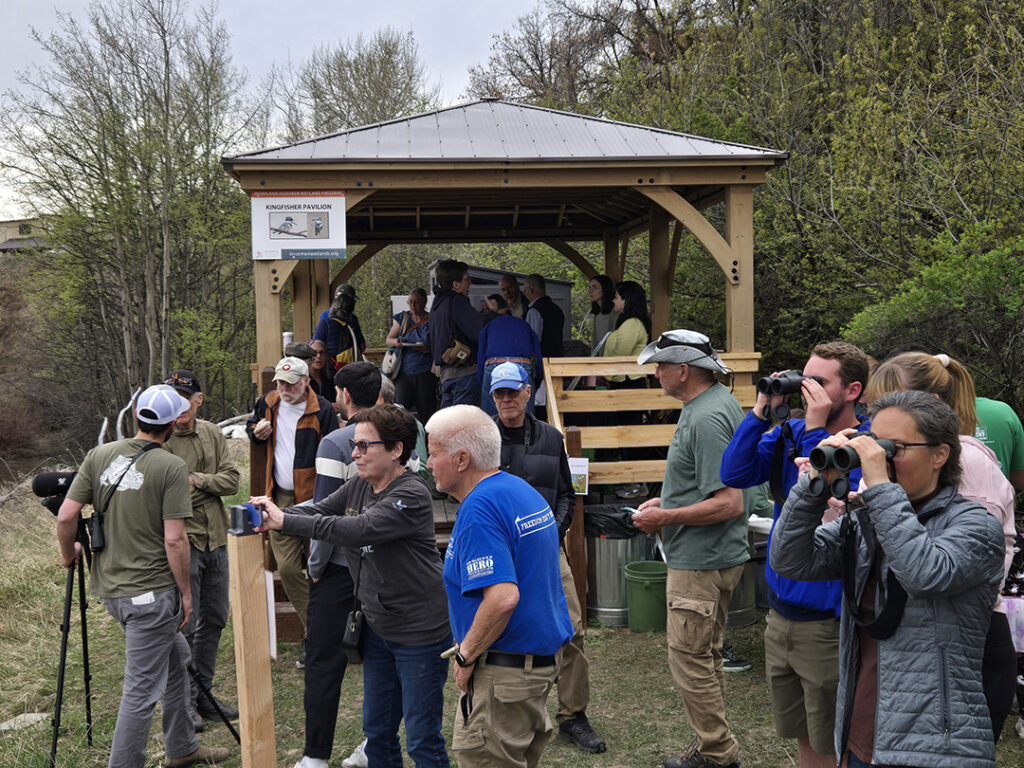
The evening began with short introductions to the Preserve and Sacajawea Audubon Society, the event sponsor (SMART FIRES), and the many ways that community members can contribute to scientific research. Participants learned how observations of birds, plants, air quality, weather, and environmental change can help scientists better understand the world around us.
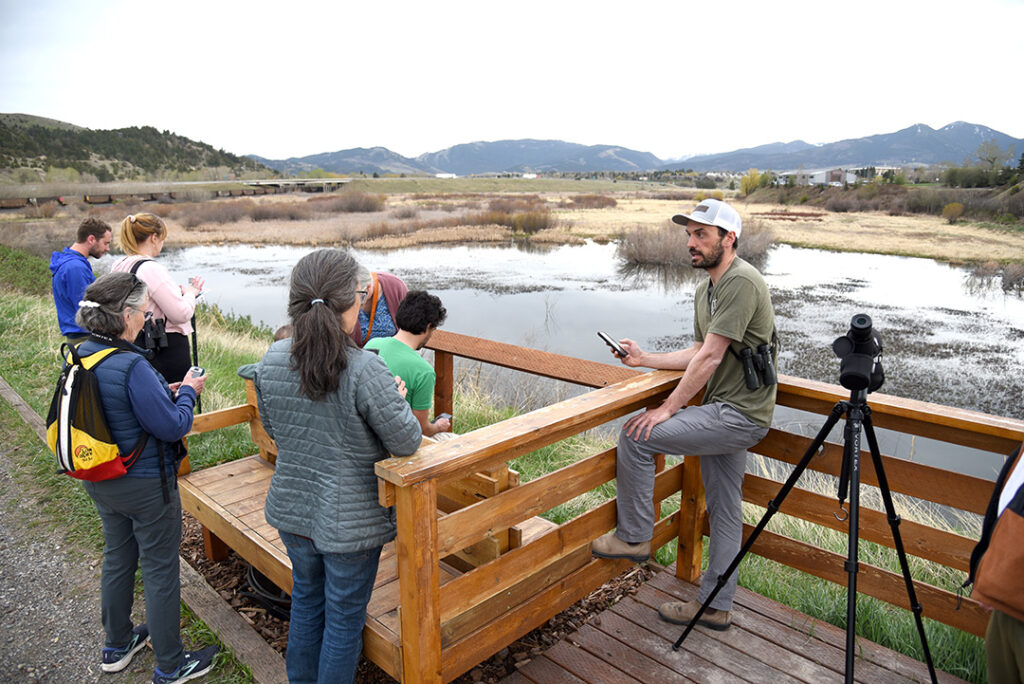
After the welcome, attendees spread out across the Preserve to explore a variety of hands-on activities. Bird expert and MSU postdoctoral researcher Ben Goodheart led a demonstration of eBird, showing participants how bird observations can contribute to a global database used by researchers and conservationists. Matt Lavin, MSU Professor Emeritus of Plant Sciences, introduced participants to iNaturalist, helping visitors identify and document the plants and other organisms they encountered along the trails.
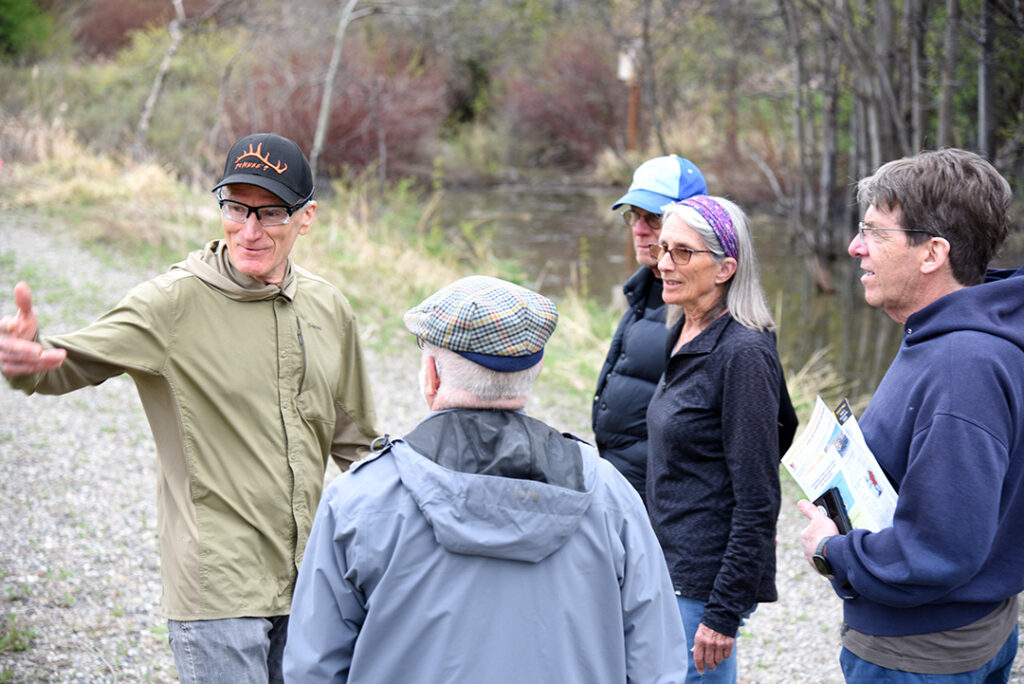
At the SMART FIRES outreach table, visitors explored air quality and fire weather monitoring equipment and learned how these tools are used to study smoke and environmental conditions. Participants also visited the Preserve’s Chronolog photo-monitoring stations, where repeat photographs help document changes in vegetation, water levels, and habitat over time.
Other participants also chose to wander and explore the Preserve on their own, binoculars in hand, enjoying the spring evening while learning about ongoing conservation and monitoring efforts.
The event highlighted an important message: you don’t need to be a professional scientist to contribute to science. Whether you’re recording a bird sighting, identifying a plant, taking a photo from a monitoring station, or tracking air quality in your neighborhood, citizen science offers meaningful ways to participate in research and stewardship.
SMART FIRES would like to thank the Sacajawea Audubon Society, our volunteer presenters and other helpers, and everyone who joined us for the evening. We hope many of the connections made at the event will lead to continued participation in citizen science projects across Montana.