Drone Camp Students Explore the Science of Prescribed Fire
This summer, students participating in the MSU Billings Drone STEM Camps discovered how drones, sensors, and engineering can help address real-world challenges in fire management. Through hands-on activities, campers built and flew drones, explored electronics and infrared sensors, and learned how emerging technologies can support researchers, firefighters, and land managers.
The camp was led by Dr. Elaine Westbrook, Assistant Professor of Science Education at Montana State University Billings, licensed drone pilot, and co-creator of the program. Camp activities introduced students to drone technology, aerospace fundamentals, and environmental data collection while highlighting STEM career pathways.
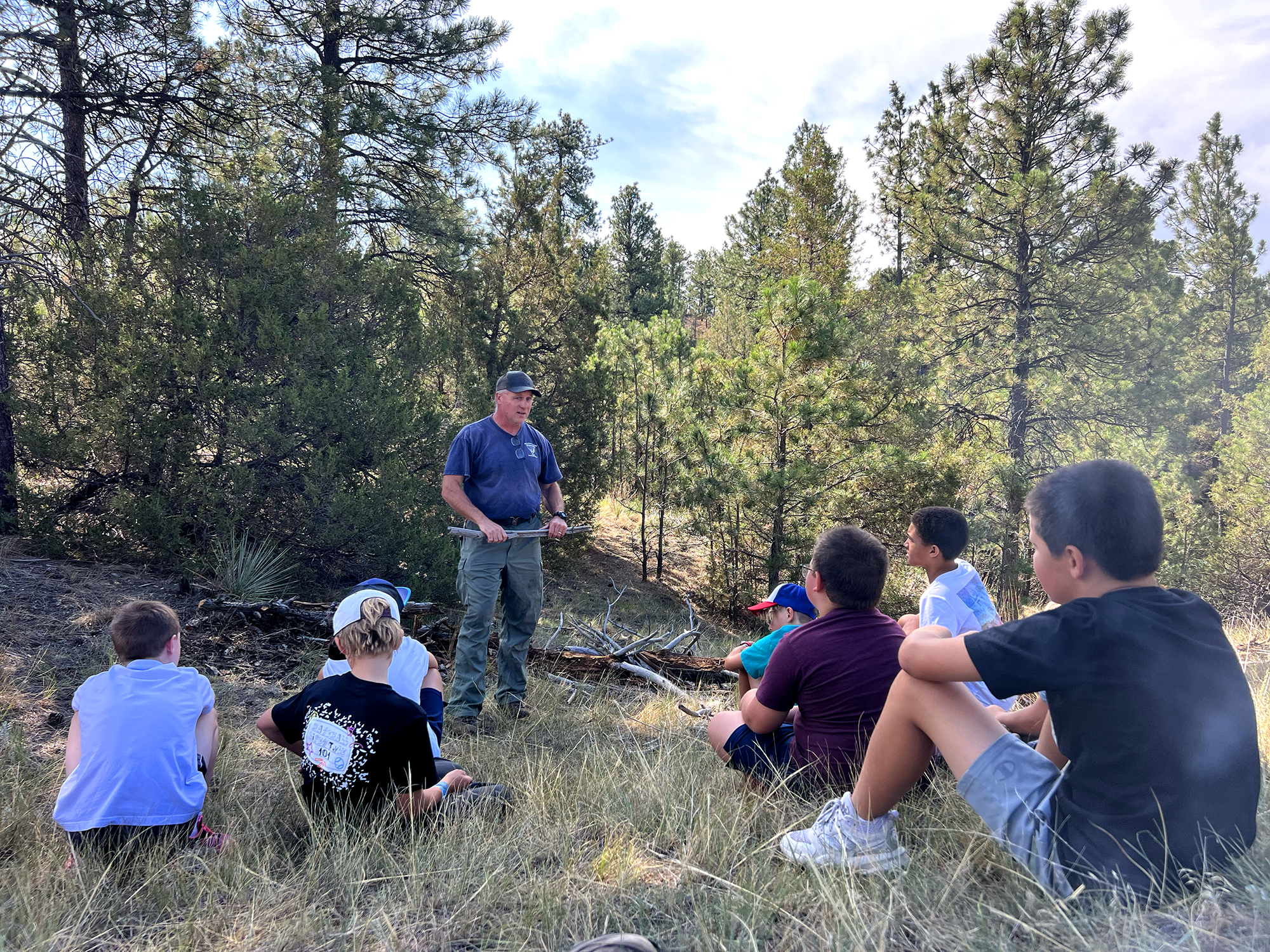
One of those applications took students beyond the classroom and to the private O’Donnell Ranch near Billings, where they visited a prescribed burn site that had been burned earlier in the year.
There, students learned from Taig O’Donnell—a Captain with the Billings Fire Department and Fire Science Program instructor at City College at Montana State University Billings—about how prescribed fire can help reduce the risk of catastrophic wildfires and promote healthier landscapes. The visit helped campers connect fire science concepts to a real location where land management activities had recently occurred.
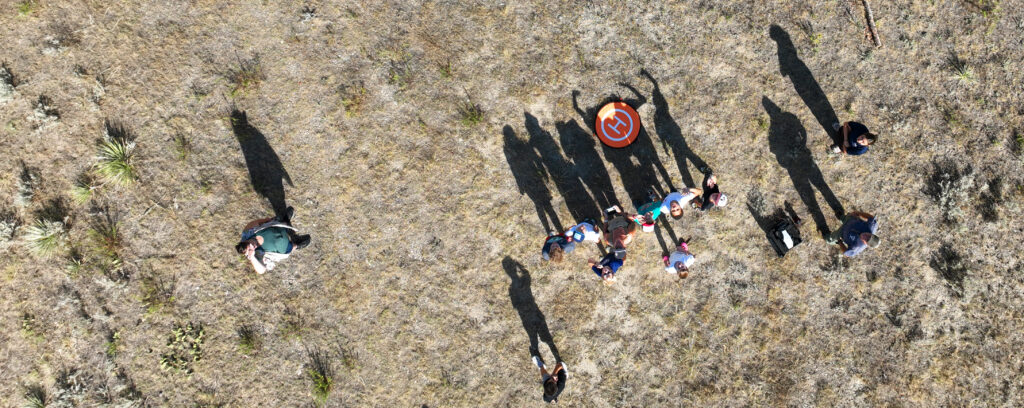
Students also experienced some of the tools used in modern fire management. They rode in a fire truck, met firefighters, flew a drone, and learned how aerial technologies support wildfire response and prescribed fire operations beyond simple recreation.
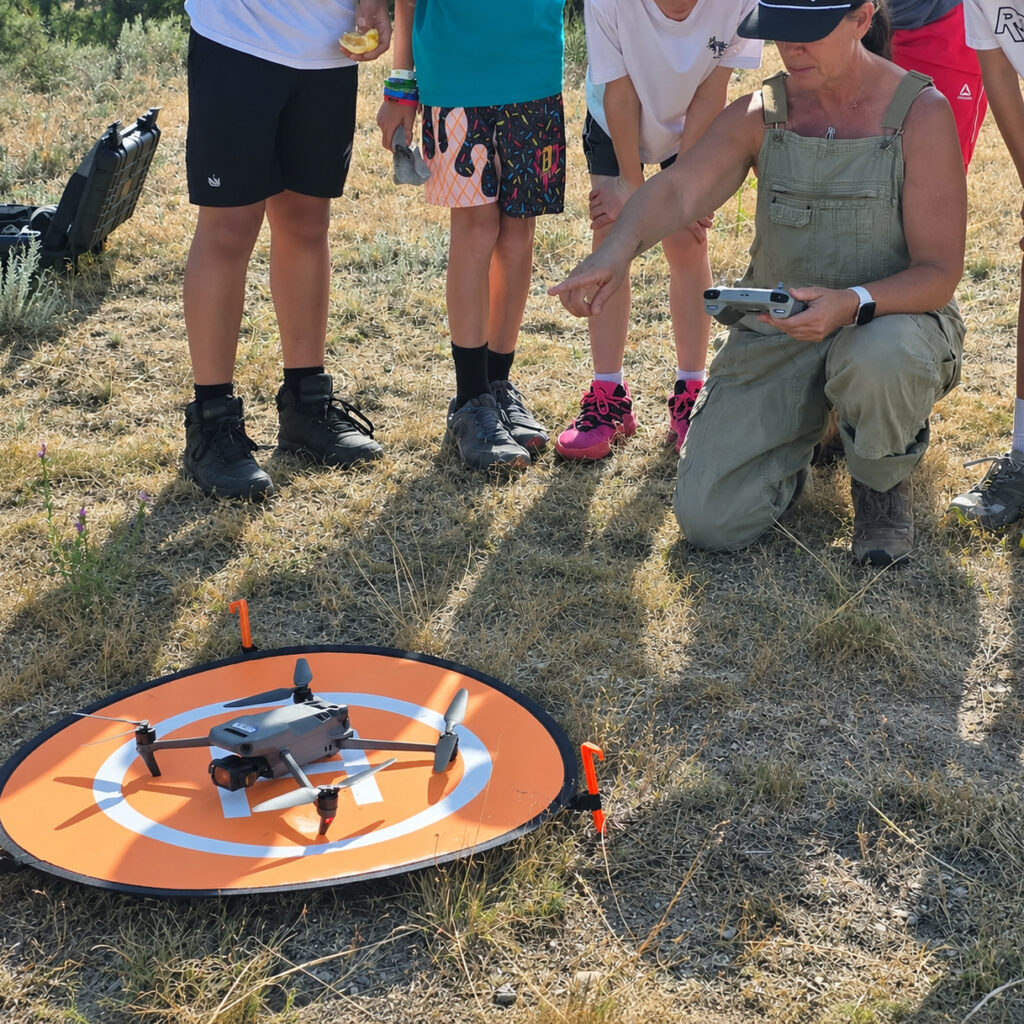
A highlight for many campers was meeting professional drone pilots from Phillips 66, the Billings Fire Department, and Kelli Maxwell, founder of Ember Marketing Group. Students were excited to see Phillips 66’s large drone systems, watch a thermal-imaging drone demonstrated by the fire department, and hear how Kelli turned her passion for drones into a successful business. One camper shared that Kelli “gave me the courage to want to run my own business just like her.”
Back at camp, students dove deeper into the technology behind drones and environmental monitoring. Campers built infrared sensor circuits on breadboards to explore how sensors detect heat and infrared energy. Along the way, they learned electronics fundamentals, troubleshooting skills, and circuit design principles. Students then progressed to soldering components, gaining practical experience with techniques used in electronics manufacturing and sensor development.
They also built and flew drones while learning how unmanned aircraft systems can serve as platforms for collecting environmental data. Discussions explored how drones equipped with thermal sensors can identify heat signatures, monitor prescribed burns, and assist firefighters in locating survivors during emergency situations.
The campers quickly absorbed new technical vocabulary, learning concepts such as yaw, pitch, and roll while developing safe flight skills.
The experience reflected the broader goal of the Drone STEM Camp: connecting students to emerging technologies while demonstrating how those technologies can be used to solve real-world problems.
By linking drone technology, electronics, remote sensing, and fire science, the camp helped students envision future pathways in engineering, environmental science, aviation, wildfire management, and other STEM careers.